


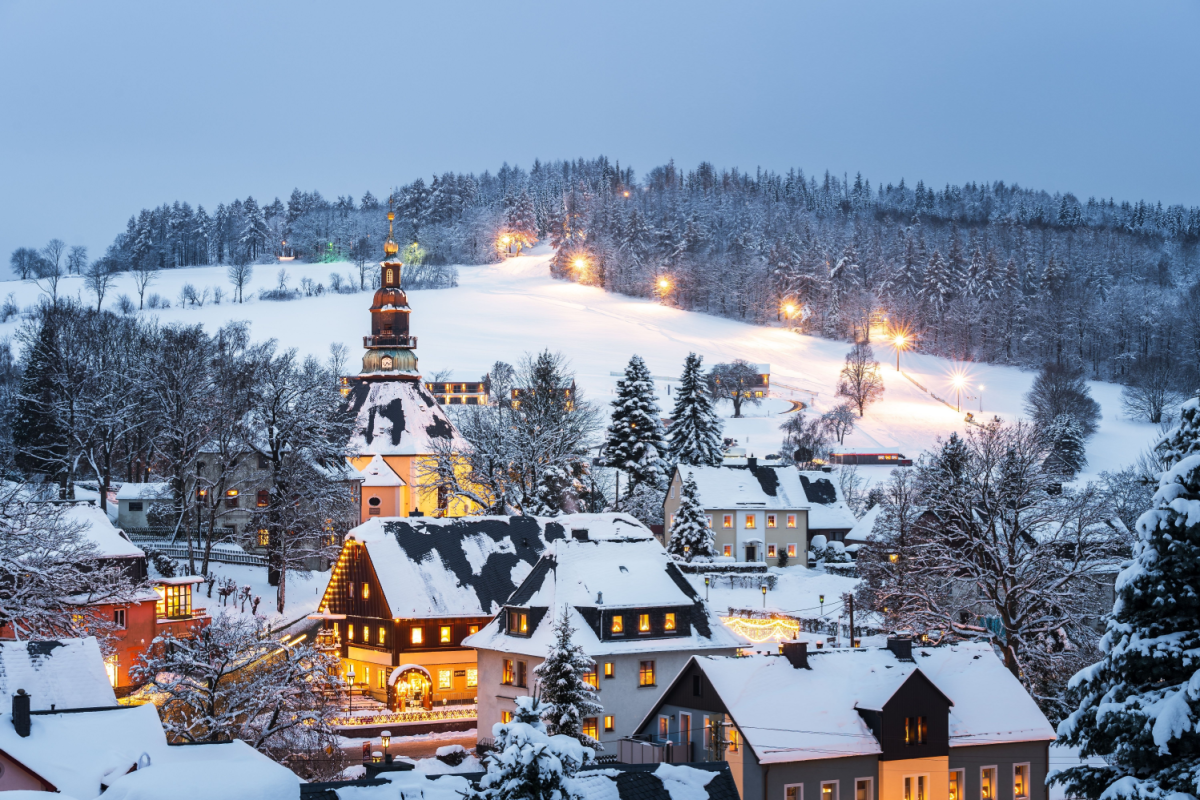
A winter wonderland in the Ore Mountains
Seiffen, known locally as Spielzeugdorf (The Toy Village), feels like stepping into a real life Christmas storybook. The streets glow with fairy lights, candlelit shop windows display thousands of handmade wooden figurines, train sets and nutcrackers, and towering wooden pyramids line the lanes. For centuries, craftspeople here have carved and turned wood into iconic Christmas toys sent around the world.
Located near the Czech border in the Ore Mountains and about 90 minutes south of Dresden, Seiffen remains largely unknown to English speaking travelers. Public transport access is limited, so many visitors arrive by car. After a fresh snowfall, forest roads lined with spruce and beech trees add to the magical atmosphere.
A village shaped by forests, mining and craftsmanship
Seiffen’s survival has always depended on the surrounding forests. The Ore Mountains — a Unesco world heritage site since 2019 — were once a major hub for silver, tin and later uranium mining. When tin supplies dwindled, miners turned to the abundant timber around them, adapting tools to carve bowls, spoons and eventually toys. One successful trip to a Christmas market sparked a new industry, and soon families across the village were carving and painting small wooden animals and figurines.
A visit to the Erzgebirgisches Spielzeugmuseum (€9) offers a deep dive into this heritage. Open since 1936, the museum houses about 5,000 exhibits including nutcrackers, Noah’s arks, model trains and intricate carvings small enough to fit in a matchbox. Visitors can also play with traditional toys and watch video presentations that explain the village’s craft traditions.
Watching master carvers at work
To experience the craft firsthand, many visitors stop at the Seiffener Volkskunst workshop. Here, artisans demonstrate the rare 19th century hoop turning technique, which uses a lathe to carve rings of wood that reveal multiple toy shapes when sliced. Only a handful of craftspeople still practice this method worldwide.
During crafting sessions, travelers can paint their own decorations. Wooden toadstools, ducks and miniature forest houses made from local birch, maple, linden or beech are common choices. Working beside professional toy painters provides a relaxing, mindful experience.
Shops, traditions and seasonal delights
Strolling through Seiffen reveals shops with distinct styles — some specialising in nutcrackers, others in angels or incense smoking figurines known as Räuchermänner. Contemporary boutiques like Wendt & Kühn are beautifully designed, though high end items such as handmade pyramids can cost upwards of €2,000.
The candle arch (schwibbogen) is one of Seiffen’s most treasured decorations. These illuminated wooden displays often feature the village church above and miners at work below, preserving the story of Seiffen’s origins. Each advent season also includes a miners’ parade with historical costumes.
Snowy trails, warm drinks and mountain views
After a bowl of hearty Heidi leek soup at Hotel Seiffener Hof (€7.80), many visitors walk to the octagonal church before continuing up the historic miners’ trail. Along the way, hot elderberry with vodka and whipped cream or red glühwein help fend off the cold. The trail leads to the Binge, once an open pit tin mine and now a quiet natural amphitheatre.
As evening falls, lights flicker on across the valley. A grilled rostbratwurst and another glühwein at Hotel Erbgericht Buntes Haus make the perfect end to the day before returning to the Panorama Berghotel Wettiner Höhe (rooms from €79) for a cozy winter night.
