


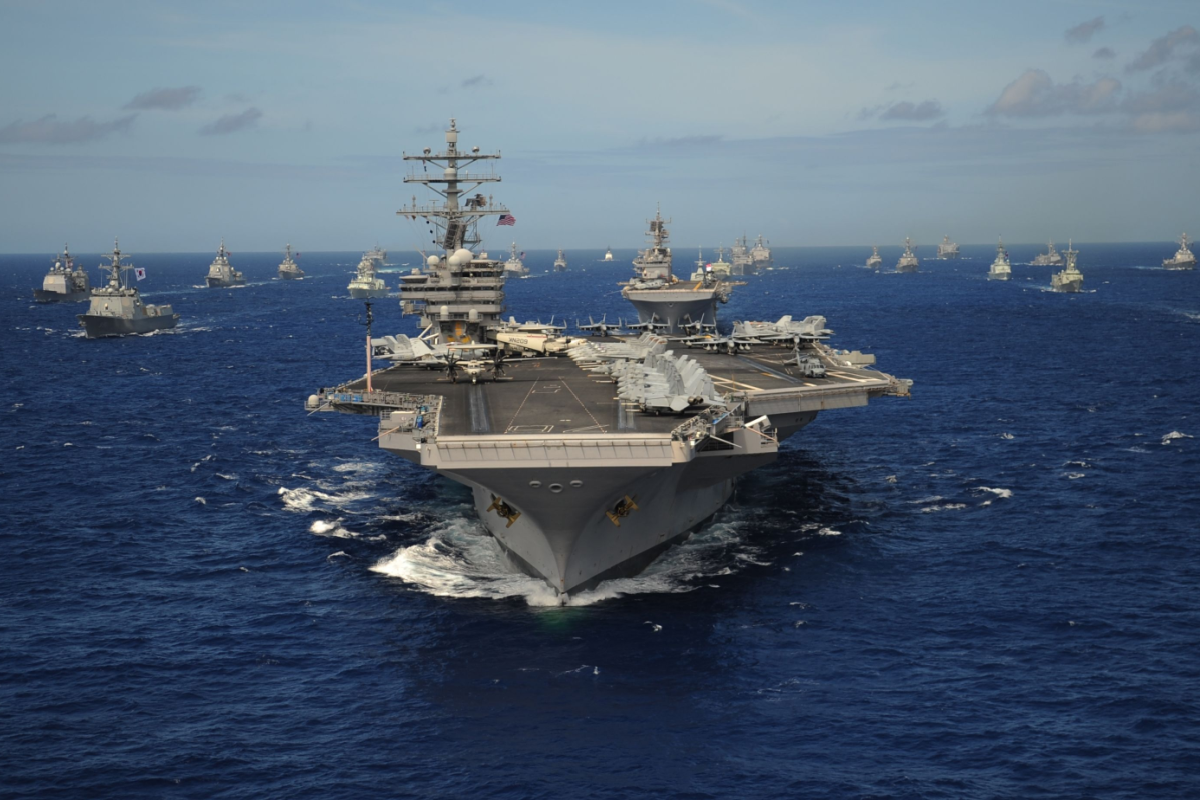
Two U.S. Navy vessels collided Wednesday during a routine replenishment-at-sea operation in waters overseen by U.S. Southern Command. The guided-missile destroyer USS Truxtun and the fast combat support ship USNS Supply were involved in the incident, which left two personnel with minor injuries. Both ships remain operational, and an official investigation is underway to determine the cause of the collision.
Although no major damage has been reported, the event highlights the operational risks associated with complex naval maneuvers conducted at sea.
Details of the Incident
The collision occurred while the two ships were conducting a replenishment operation, a procedure in which fuel, food, ammunition and other supplies are transferred between vessels while sailing side by side. These operations require precise navigation, communication and coordination, as ships must maintain close proximity in open water.
Military officials confirmed that two sailors sustained minor injuries and are in stable condition. Both USS Truxtun and USNS Supply are reported to be sailing safely following the incident. The exact location of the collision has not been publicly disclosed.
Operational Context
The incident took place within the area of responsibility of U.S. Southern Command, which oversees military operations across Central America, South America and the Caribbean. In recent months, the United States has increased its naval presence in the region, deploying multiple warships as part of broader strategic objectives.
Replenishment-at-sea operations are routine but technically demanding. Ships must match speed and heading while crews transfer critical supplies across narrow distances, often under varying sea conditions.
Investigation and Safety Considerations
An investigation has been launched to determine the factors that led to the collision. Officials have not yet indicated whether mechanical issues, navigational error or communication breakdown contributed to the event.
Naval history underscores the importance of strict adherence to operational protocols. Past collisions involving Navy vessels have resulted in extensive reviews of training standards, leadership oversight and safety procedures. Authorities are expected to assess similar elements as part of the current inquiry.
Conclusion
The collision between USS Truxtun and USNS Supply resulted in minor injuries but no reported loss of operational capability. As the investigation proceeds, the Navy will likely examine the circumstances closely to reinforce safety measures during replenishment operations. The incident serves as a reminder of the precision required in complex maritime missions.
