


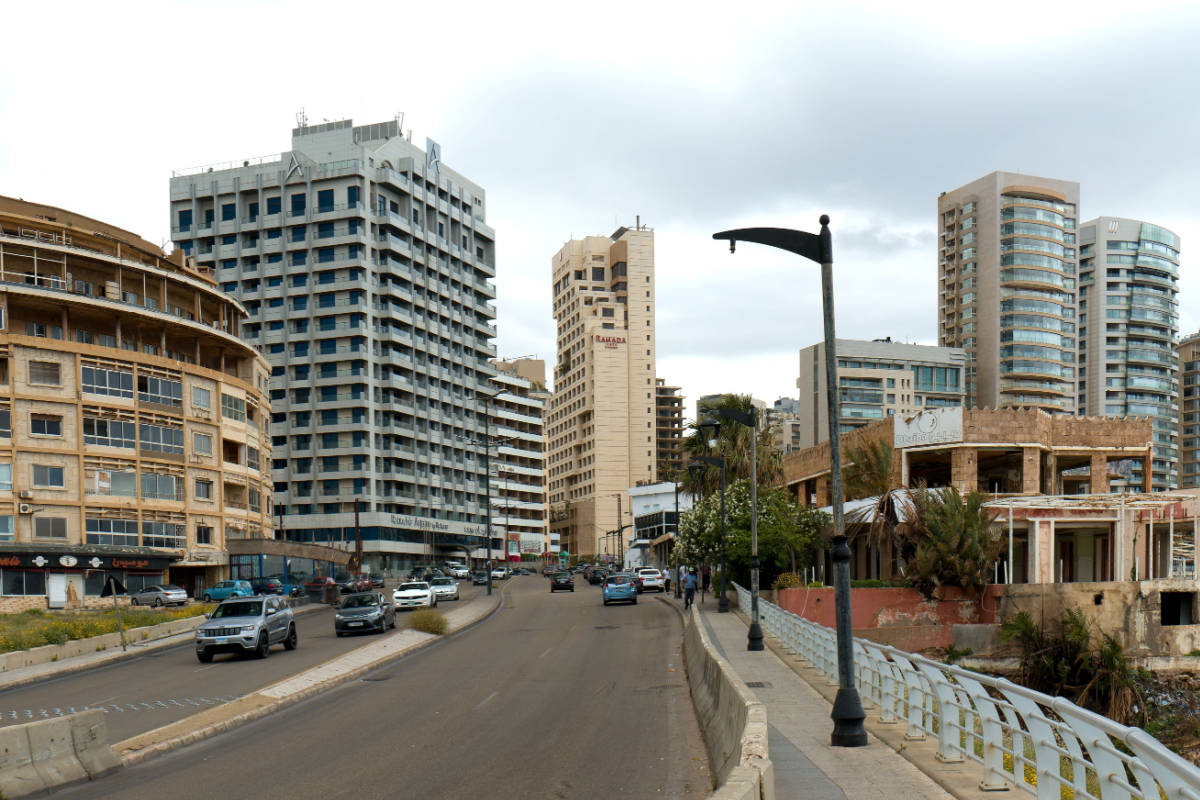
An Israeli strike hit the Ramada Plaza hotel in Beirut’s Raouche district at about 01:30 local time, marking a major escalation in the week-old surge of fighting in Lebanon. The attack was the first to visibly pierce the capital’s central coastal zone, an area known for restaurants, hotels, and heavy evening foot traffic during Ramadan.
Lebanese authorities reported an initial toll of four killed and ten injured. The blast damaged nearby vehicles and scattered debris across the surrounding streets. Residents described being jolted awake by the sound and by windows shaking across the neighborhood.
A Strike Outside the Usual Targets
Since hostilities intensified, many attacks in Lebanon have concentrated on southern Lebanon, the Bekaa Valley, and Beirut’s southern suburbs, areas widely regarded as core strongholds for Hezbollah and parts of the country’s Shia community. Raouche lies well beyond that typical strike pattern, increasing anxiety among residents and among families displaced from other parts of Beirut who have sought shelter farther north.
People in the area described a shift in their perception of risk. Some said they were accustomed to hearing drones overhead, but not to explosions in their neighborhood. Others argued the widening target set reinforces the view that no part of Lebanon can be considered insulated from the conflict.
Competing Accounts Over Who Was Targeted
Israel said the strike hit a room used for a clandestine meeting involving members of Iran’s Quds Force, the external operations arm linked to the Islamic Revolutionary Guard Corps. Israel also said those killed included individuals involved in funding transfers and intelligence activity tied to Hezbollah operations in Lebanon.
Iran rejected that characterization, describing the dead as Iranian diplomats and accusing Israel of carrying out targeted assassinations on Lebanese territory. Iran framed the incident as a serious breach of international norms and sovereign protections. Hezbollah did not issue a public comment on the identities of those killed or on the claim that Iranian personnel were present.
Lebanese sources described a security investigation at the hotel and restrictions on access to certain floors while officials collected evidence. Witnesses in the vicinity reported that the physical damage appeared concentrated around the fourth floor, with visible charring and blown-out windows at the impact point.
Displacement, Fear, and a Changed Sense of Safety
The strike landed in a part of Beirut that has become a refuge for people displaced by evacuation warnings and military activity elsewhere. Many hotel rooms in central districts are now being used as temporary shelter for families who fled earlier attacks, adding a humanitarian dimension to the security shock.
Some residents said the lack of warning heightened fear, especially for people who work night shifts or live near busy commercial streets. Others, including displaced families, voiced resignation and fatigue, saying repeated upheavals have altered expectations of where safety can realistically be found.
The United Nations has estimated hundreds of thousands of people have been displaced in Lebanon since the renewed escalation. For those who fled from the south or from Beirut’s southern suburbs, the Raouche strike underscored that relocation within the capital does not guarantee distance from violence.
Regional Pressure Builds on Lebanon’s Government
The strike also intensified political pressure on Lebanon’s authorities, who face competing demands: managing internal security, addressing displacement, and navigating escalating regional dynamics. Lebanese officials have publicly emphasized that any foreign military activity on Lebanese soil, regardless of origin, complicates efforts to contain the conflict and protect civilians.
In the days around the strike, travel advisories, diplomatic movements, and security warnings contributed to an atmosphere of heightened uncertainty. Residents described an uneasy normality in Raouche afterward, with traffic resuming and businesses reopening, even as people stared upward at the damaged hotel facade.
For many in Beirut, the central question is whether the capital’s coastal districts will remain an exception, or whether the conflict’s geography is shifting into a broader, less predictable phase.
